
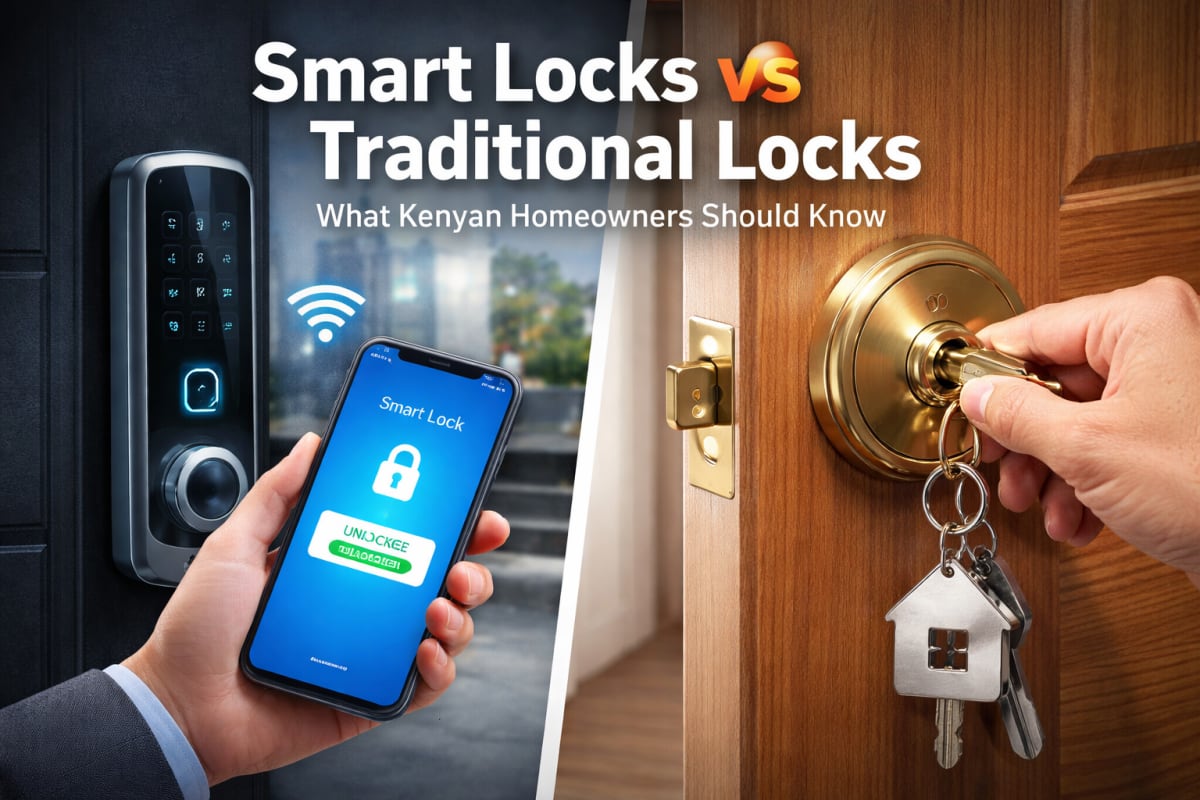
The "smart lock vs traditional lock" debate is one of the most common questions we get from Kenyan homeowners. Both have their place, and the right answer depends on your specific needs.
Traditional locks have one big advantage: they work without electricity, batteries, or an internet connection. For rural properties, holiday homes, or anyone who prioritises pure mechanical reliability, a high-grade Mul-T-Lock or Yale deadbolt is still an excellent choice.
Smart locks, however, solve problems that traditional locks simply can't. Lost keys become a non-issue, you can issue temporary PIN codes to house help, delivery services, or visiting relatives, and revoke them instantly from your phone. Every entry is logged, so you know exactly who came in and when.
For families with children, smart locks eliminate the daily anxiety of "did the kids lock the door after school?" You can check from work, lock it remotely, and get a notification the moment it's opened.
The security concern most people raise is: what about hackers? Modern smart locks from reputable brands (Aqara, Philips, Yale, SIFANET-certified installs) use AES-128 encryption, the same standard used by banks. Physical attack resistance on premium models exceeds that of most traditional locks, with reinforced steel bodies and anti-drill plates.
Battery life is another common concern. Typical smart locks run 6-12 months on 4 AA batteries, with low-battery warnings months in advance. Many models also have a physical key override and a backup USB port for emergencies.
Cost-wise, smart locks start around KES 18,000 installed and go up to KES 65,000 for enterprise-grade units with biometric and fingerprint access. Traditional high-security locks range from KES 4,000 to KES 15,000.
Our recommendation: for most urban and suburban homes, a hybrid approach works best. Install a smart lock on your main entrance where convenience and logs matter, and keep a traditional high-security lock on secondary doors like the gate or garden entry.