
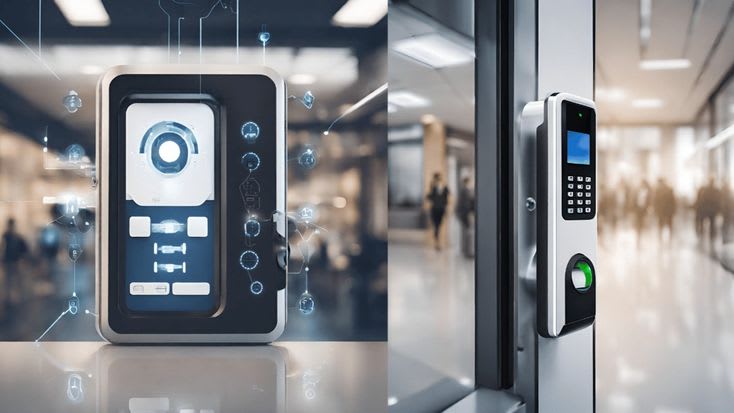
Access control used to mean one thing: a metal key on a ring. Today, there are at least six credible technologies competing for the job, and the right answer depends on your specific use case.
RFID Keycards (HID, iCLASS, MIFARE): The workhorse of corporate access control. Cards are cheap to replace (KES 300-800 per card), easy for staff to carry, and integrate smoothly with visitor management systems. Downside: cards get shared, borrowed, and lost, which undermines accountability.
PIN Codes: Cheap and simple. Great for secondary doors, shared spaces, and situations where logging specific individuals isn't critical. Major downside: codes get shoulder-surfed, shared, and rarely changed. Use as a supplementary factor, not primary.
Biometric Fingerprint: The sweet spot for most small and medium offices in Kenya. Modern readers (Suprema, ZKTeco, FingerTec) handle up to 10,000 fingerprints, work reliably in dusty environments, and cost KES 25,000-70,000 per door installed. One finger = one identity, so accountability is strong.
Facial Recognition: Increasingly affordable thanks to Chinese OEMs (Hikvision, Dahua). Works hands-free, useful for high-traffic entrances, but struggles with masks, glare, and identical-twin edge cases. Best paired with a second factor for high-security zones.
Mobile Credentials (Bluetooth / NFC): Staff use their phone as the credential. No cards to lose, easy to provision remotely, and integrates well with visitor management. The catch: battery-dead phones can't open doors, so always keep a backup credential method.
Hybrid Multi-Factor: For high-security areas (server rooms, cash handling, labs), combine two factors: card + PIN, or face + fingerprint. The principle is "something you have and something you are", either factor alone is useless.
Our typical recommendation for a Kenyan SME office (20-80 staff):
- Fingerprint readers on the main entrance and back door (biometric accountability)
- RFID cards as a secondary credential for visitors and contractors
- Cloud-based access control server (Suprema BioStar, ZKBio CVCloud) so you can manage remotely
- Full audit logs retained for at least 12 months
- Integration with time-and-attendance for automated payroll data
Budget: KES 180,000-350,000 for a full 2-door system with software and training. Larger campuses scale linearly.
The biggest mistake we see: over-investing in the hardware and under-investing in the software, training, and policy. A KES 1 million system that nobody configures properly is a waste; a KES 250,000 system with clear policies and quarterly reviews is genuinely protective.


